Mechanical Engineering for Society and Industry
About the Journal
Mechanical Engineering for Society and Industry (MESI) is an international peer-reviewed open-access journal that publishes high-quality research and innovation in mechanical engineering and related disciplines. The journal covers a broad range of topics, including mechanics, energy systems, materials engineering, manufacturing technologies, and interdisciplinary applications that support technological advancement in society and industry. MESI welcomes contributions from researchers, engineers, practitioners, and policymakers seeking to address real-world engineering challenges through scientific and technological innovation. The journal provides a platform for disseminating knowledge that advances engineering practice, industrial development, and sustainable technological solutions.
Journal Uniqueness and Mission
Mechanical engineering is an engineering discipline that integrates the principles of physics, engineering mathematics, and materials science to design, analyze, manufacture, and maintain mechanical systems for solving complex engineering problems. Reflecting this broad foundation, MESI publishes research and innovation in mechanics, energy, materials, manufacturing, and related interdisciplinary fields that address challenges in society and industry.
MESI is distinguished by its comprehensive coverage of the engineering innovation lifecycle, accommodating research across all Technology Readiness Levels (TRLs)—from fundamental studies and proof-of-concept investigations to technology demonstration, prototyping, scale-up, industrial implementation, and commercialization. This unique approach enables the journal to bridge the gap between scientific discovery and practical impact.
Committed to advancing sustainable technological development, MESI promotes engineering innovations that contribute to industrial competitiveness, societal well-being, and the achievement of the United Nations Sustainable Development Goals (SDGs). By connecting academia, industry, and society, the journal supports the transformation of engineering knowledge into sustainable and impactful solutions.
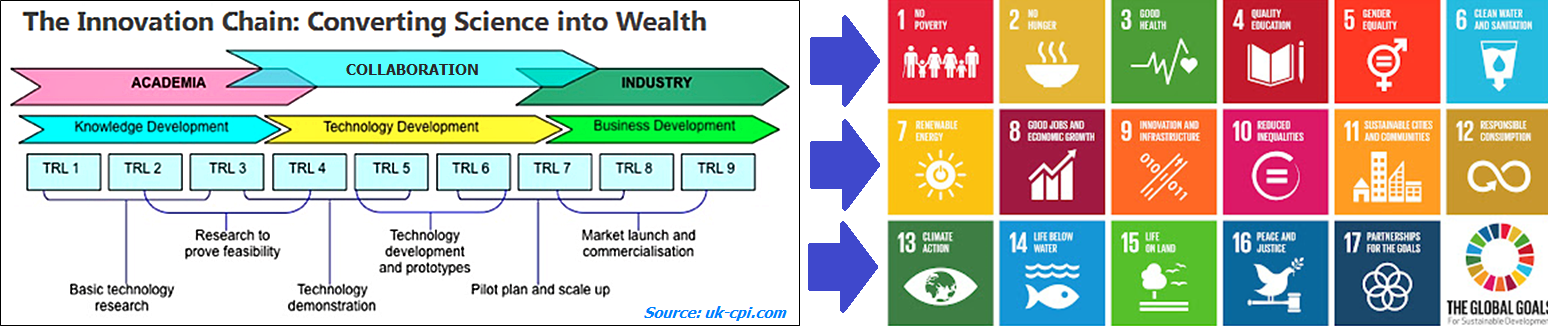
Learn more about Technology Readiness Level (TRL) on the NASA website. We hope this journal can be a source of new insights and inspiration for further research.
Authors' testimonials
We are very concerned about serving authors during the editorial process by upholding publication ethics. Implementing continuous quality assurance in publishing is one of our missions. Our editorial process is supervised and audited twice a year by our institution. The audit parameters include aspects of publishing management, article contributions, timeliness of publication, and adherence to publishing policies. We also conducted an author satisfaction survey to receive valuable feedback from them. As a form of transparency and accountability, we display the results of the author satisfaction survey and author comments in this link.
Open access—free access for all readers.
Continuous publication—accepted articles are published promptly.
Reasonable APC—details on APC can be found here.

sdgs
MESI contributes to